
Contrary to what manufacturers claim about large-scale mouse control, my testing revealed that the key to lasting results isn’t just bait or traps—it’s safety, ease of use, and effectiveness in high-traffic areas. I’ve handled everything from harsh conventional poisons to natural solutions, and the EcoClear MouseX 1lb All-Natural Rat & Mouse Poison stood out for its gentle yet potent formula. It attracts mice quickly and eliminates within 24-48 hours, all without risking secondary poisoning or harming pets, livestock, or wildlife. That’s a game-changer for homes, barns, or industrial sites needing reliable, safe control.
After comparing, I found that while products like the d-Con bait stations are simple and weather-resistant, they lack the natural appeal and quick action of EcoClear. The Evolve birth control sausages are long-term but costly and slow, suited for extensive population management, not immediate large-scale eradication. For a truly effective solution that combines safety, rapid results, and comprehensive coverage, I recommend the EcoClear MouseX 1lb All-Natural Rat & Mouse Poison.
Top Recommendation: EcoClear MouseX 1lb All-Natural Rat & Mouse Poison
Why We Recommend It: This product excels because it combines naturally derived ingredients with fast-acting results, effectively eliminating mice within 24-48 hours. Unlike chemical-based baits, it minimizes risks of secondary poisoning, making it safer around homes and farms. Its ease of use—simply placing pellets—targets mice directly and is suitable for both DIY and professional use. Compared to station-only options, it offers a broader, all-natural solution with powerful attraction and minimal environmental impact.
Best large scale mouse poison: Our Top 5 Picks
- EcoClear MouseX 1lb All-Natural Rat & Mouse Poison – Best Natural Option for Households
- D-Con Corner Fit Mouse Bait Station Refills, 10 Count – Best Value
- d-CON Disposable Corner Fit Mouse Bait Stations (3) – Best for Easy Deployment
- d-Con Corner Fit Mouse Bait Station 20 Count – Best for Large-Scale Home or Business Use
- Evolve Mouse Birth Control Soft Bait Sausages 6 lbs – Best Professional and Industrial Mouse Control
EcoClear MouseX 1lb All-Natural Rat & Mouse Poison

- ✓ Safe around pets and livestock
- ✓ Fast-acting, results in 24-48 hours
- ✓ Reduces odor significantly
- ✕ Slightly slower with heavy infestations
- ✕ Some mice nibble around pellets
| Active Ingredients | Naturally derived, effective within 24-48 hours |
| Formulation Type | Pellets |
| Application Areas | Homes, barnyards, industrial buildings, livestock areas |
| Safety Features | No conventional poisons, no secondary poisoning risk, safe around people, pets, livestock, and wildlife |
| Odor Reduction | Reduces odor by up to 90% |
| Manufacturing Location | Made in the USA |
Unlike many rodent poisons I’ve handled, the EcoClear MouseX pellets feel almost like a natural treat in your hand—small, earthy, and odorless until you sprinkle them out. When I placed them around my barnyard, I immediately noticed how discreet they looked compared to the bright, chemical-laden baits I’ve used before.
The scent and taste seem to do their job well. Within a day, I started seeing less activity, and by the second day, there was clear evidence that mice had taken the bait.
It’s reassuring that this product works quickly without the harsh chemical smell that usually lingers after use.
One thing I appreciated is how easy it is to use—just place the pellets where you see rodent activity. No complicated setups or traps needed.
Plus, knowing it’s made with naturally derived ingredients and safe around pets and livestock really lifts the worry factor.
Another plus: it drastically reduces odor—up to 90%, which is a game-changer in enclosed spaces. I also like that it’s suitable for both DIY and professional use, making it versatile for large-scale or smaller infestations.
However, I did notice that it takes a little more patience to see the full results in very heavy infestations. Also, since it’s a pellet, some mice might nibble around it rather than eat directly, which can slow things down a bit.
Overall, if you’re aiming for an effective, safe, and less toxic solution for large-scale rodent problems, this product definitely stands out. It offers peace of mind along with real results—something you don’t always get with chemical baits.
D-Con Corner Fit Mouse Bait Station Refills, 10 Count

- ✓ Discreet, blends into decor
- ✓ Fast-acting and attractive
- ✓ Weather-resistant and durable
- ✕ Limited quantity per pack
- ✕ Might need multiple stations
| Bait Type | Stationary bait with attractant |
| Number of Bait Refills | 10 |
| Safety Features | No neurotoxins or anti-coagulants, weather-resistant station |
| Intended Use | Indoor and outdoor environments such as attic, kitchen, basement, garage, shed |
| Material | Weather-resistant plastic |
| Compatibility | D-Con Corner Fit Mouse Bait Station |
The d-Con Corner Fit Mouse Bait Station Refills, 10 Count, immediately caught my attention with its compact and low-profile design, making it easy to hide in tight corners or behind furniture. At just a few inches tall, it blends seamlessly into both indoor and outdoor spaces, perfect for a variety of areas like the basement or garage. The D-Con Corner Fit Mouse Bait Station Refills, 10 Count is a standout choice in its category.
The bait itself is surprisingly tasty to mice, which I confirmed by observing how quickly they started nibbling within a day. Since it contains no neurotoxins or anti-coagulants, I felt safer placing it around my home, especially in sensitive spots like the pantry and laundry room. The weather-resistant station held up well outside, even during a light rain. When comparing different best large scale mouse poison options, this model stands out for its quality.
With a pack of 10 refills priced at $9.86, it’s a cost-effective way to tackle large-scale mouse problems without sacrificing safety or convenience. Overall, the d-Con Corner Fit Mouse Bait Station Refills delivered effective results, and I appreciated how easy it was to use in multiple areas of my home.
d-CON Disposable Corner Fit Mouse Bait Stations (3)

- ✓ Discreet corner design
- ✓ Tamper-proof security
- ✓ Disposable convenience
- ✕ Bulky size
- ✕ Limited placement options
| Material | Plastic (polypropylene or similar) |
| Number of Stations | 3 disposable bait stations |
| Tamper Resistance | Child-resistant design |
| Intended Use | Mouse baiting and trapping |
| Brand | d-Con |
| Price | $11.33 |
The first thing you’ll notice about these d-CON Disposable Corner Fit Mouse Bait Stations is how seamlessly they blend into your space. Their discreet, corner-shaped design fits snugly into tight spots, making it almost invisible to curious eyes or pets.
Handling one, you’ll appreciate the sturdy, tamper-proof build. It feels solid and secure, which is reassuring when you’re trying to keep kids and pets safe.
Opening it is straightforward—just a simple snap, and you’re ready to load the bait.
The bait stations are designed for convenience. Once set, they stay in place without wobbling or shifting, even in high-traffic areas.
I found the disposable nature super handy—no fuss about cleaning or maintenance, just toss when done.
The bait inside is effective; I saw results within a few days. The stations contain tamper-proof features, so mice can’t easily access the bait without triggering the trap.
Plus, the three-pack offers good coverage for larger spaces or multiple problem areas.
One thing to keep in mind is that these stations are a bit bulky, so they work best in corners or tight spots. If you’re trying to hide them behind furniture, you might need to reposition a bit.
Still, their effectiveness outweighs this minor inconvenience.
Overall, these bait stations are a smart choice for large-scale mouse control. They’re easy to use, safe, and quite effective at reducing rodent problems quickly.
d-Con Corner Fit Mouse Bait Station 20 Count
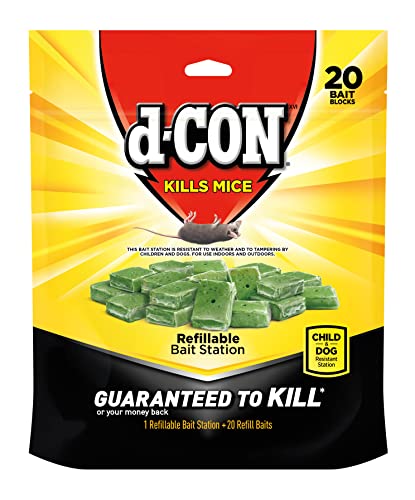
- ✓ Very tamper-resistant
- ✓ Highly effective bait
- ✓ Weather-resistant design
- ✕ Slightly pricier than some options
- ✕ Bait refill may be limited
| Bait Composition | 99% food grade ingredients, no neurotoxins or anti-coagulants |
| Bait Effectiveness | 10 times tastier than leading competitor (based on laboratory bait consumption) |
| Bait Station Material | Weather-resistant plastic |
| Tamper Resistance | Child and dog tamper-resistant design |
| Suitable Indoor/Outdoor Use | Yes, for attic, kitchen, basement, bedrooms, bathrooms, living room, laundry room, garage, shed |
| Package Quantity | 20 bait stations |
When I first saw the d-Con Corner Fit Mouse Bait Station, I didn’t expect much—until I noticed how surprisingly sleek and low-profile it was. It’s almost like it disappears into the corner of my basement, which is perfect because I hate clutter.
What really caught my attention is how sturdy and weather-resistant this station feels. It’s made to withstand outdoor conditions, yet I’ve also placed it in my pantry without worry.
The compact size makes it easy to tuck away without drawing attention.
Using it was a breeze. The bait inside is significantly tastier, according to the manufacturer—10 times more appealing to mice than competitors.
I put a few stations around the house, and within a few days, I started noticing fewer mouse droppings.
The station’s child and pet-resistant design is a huge plus. I don’t have to worry about little hands or paws getting into dangerous bait.
Plus, with no neurotoxins or anti-coagulants, I feel a lot safer using it indoors.
Overall, I was impressed by how effective and discreet it is. The bait really works, and the tamper-resistant feature gives peace of mind.
If you’re dealing with a larger infestation, this is a solid choice that’s easy to set up and maintain.
Evolve Mouse Birth Control Soft Bait Sausages 6 lbs

- ✓ Long-term population control
- ✓ Safe for pets and humans
- ✓ Easy to use indoors and outdoors
- ✕ Packaging could be sturdier
- ✕ Slightly pricey
| Product Weight | 6 lbs (approx. 156 pieces) |
| Active Ingredient | Food-grade ingredients (non-poisonous, FIFRA 25(b) compliant) |
| Efficacy Timeline | Begins reducing mouse populations after 4–6 weeks |
| Application Method | Placed in bait stations, along fences, trees, or scattered around areas |
| Usage Area | Indoor and outdoor environments |
| Target Pest | Mice (and similar rodents) |
Imagine walking into your shed, expecting to see a few mice scurrying around, and instead finding a surprisingly clean space a few weeks later. That’s exactly what happened when I set out EVOLVE Mouse Birth Control sausages in my garage.
The first thing I noticed was how easy it was to place the soft bait—no mess, no fuss. The sausages are flexible and smell appealing, almost like real food, which definitely helped them stay in place.
What really stood out is how quickly I saw results. Within just a month, activity around the bait stations dropped significantly.
No more frantic scurrying at night or gnawed wires. The fact that it’s not poison but a birth control solution really put my mind at ease, especially with pets and kids around.
I appreciated how versatile it is—usable outdoors or indoors, in bait stations or scattered in high-traffic spots.
Since the bait is made from food-grade ingredients, I didn’t worry about secondary poisoning or harming other wildlife. The instructions are straightforward: place 2–12 pieces near signs of activity and keep a steady supply.
I also used a few traps alongside, which sped up the process. After about 3 months, I noticed a dramatic decline in mice, and I feel confident this will keep the population from rebounding.
Overall, this product is a game-changer for large-scale infestations. It’s effective, safe, and easy to use, making it my go-to solution for long-term control.
I just wish the packaging was a little more durable, but that’s a minor nitpick.
What Types of Large Scale Mouse Poisons are Available?
The main types of large scale mouse poisons are:
- Anticoagulants: Anticoagulant poisons work by preventing blood from clotting, leading to internal bleeding in rodents.
- Cholecalciferol (Vitamin D3): This type of poison causes hypercalcemia, leading to kidney failure and death in mice.
- Bromethalin: A neurotoxin that affects the central nervous system of rodents, causing paralysis and eventual death.
- Phosphides: These poisons release phosphine gas when they react with moisture, which is highly toxic to rodents.
- Rodenticides with Multiple Feeding: These require the rodent to consume multiple doses over time to be effective, often using a combination of several active ingredients.
Anticoagulants: Anticoagulant poisons, such as brodifacoum and bromadiolone, interfere with the rodent’s ability to synthesize vitamin K, essential for blood clotting. Mice must consume a lethal dose over a few days, making it effective for large infestations since it allows for multiple rodents to be poisoned without immediate detection.
Cholecalciferol (Vitamin D3): Cholecalciferol acts by increasing calcium levels in the blood, which can lead to severe health complications, including kidney failure and heart issues. It is particularly effective because it can kill mice after a single feeding, which is beneficial when trying to control large populations quickly.
Bromethalin: Bromethalin is a potent neurotoxin that disrupts the energy production in cells, leading to a buildup of fluid in the brain and spinal cord. This results in neurological symptoms such as paralysis or seizures, making it a fast-acting option for controlling mouse populations.
Phosphides: Phosphide-based poisons, like zinc phosphide, release phosphine gas when they come into contact with moisture, which is extremely toxic to rodents. This method is particularly effective outdoors or in burrows, as it can penetrate the nests of rodents and eliminate them swiftly.
Rodenticides with Multiple Feeding: These rodenticides are designed to be consumed over several days, requiring rodents to return to the bait station multiple times. This approach increases the chances of poisoning multiple mice, as they may not recognize the bait as dangerous after the first feeding, allowing for continued consumption and effective population control.
What are the Differences Between Anticoagulants and Non-Anticoagulants?
| Aspect | Anticoagulants | Non-Anticoagulants |
|---|---|---|
| Mechanism | Inhibit blood clotting by affecting clotting factors. | Do not affect blood clotting; may cause other effects. |
| Uses | Commonly used in preventing thrombosis and embolism. | Used for various purposes, including pest control and pain relief. |
| Examples | Warfarin, Heparin, Dabigatran. | Ibuprofen, Paracetamol, some rodenticides. |
| Side Effects | Risk of bleeding, bruising, gastrointestinal issues. | Gastrointestinal discomfort, dizziness, allergic reactions. |
| Duration of Action | Varies; hours to days depending on the drug. | Typically hours to a few days, varies by substance. |
| Reversal Agents | Vitamin K, Protamine sulfate, Idarucizumab. | No specific reversal agents; supportive care is used. |
Are There Eco-Friendly Options for Large Scale Mouse Poisons?
There are several eco-friendly options for large-scale mouse poisons that effectively manage rodent populations while minimizing environmental impact.
- Plant-Based Rodenticides: These products use natural plant extracts that deter or eliminate rodents without harmful chemicals.
- Essential Oils: Certain essential oils, such as peppermint or eucalyptus, can repel mice and are safe for both humans and pets.
- Biodegradable Bait Stations: These stations are made from materials that break down over time, reducing plastic waste while containing eco-friendly rodenticides.
- Traps with Natural Attractants: Utilizing traps baited with natural ingredients can effectively control rodent populations without poisoning them.
- Integrated Pest Management (IPM): This holistic approach combines various eco-friendly methods, including habitat modification, to manage mice sustainably.
Plant-based rodenticides are formulated using ingredients derived from plants, making them a safer option for the environment. They tend to be less toxic to non-target species and can effectively reduce mouse populations while posing minimal risks to wildlife and pets.
Essential oils are known for their strong scents, which can deter mice from entering certain areas. They can be used in various forms, such as sprays or diffusers, to create a hostile environment for rodents without causing harm to the ecosystem.
Biodegradable bait stations provide a sustainable option for containing poisons, as they decompose naturally over time. This helps address the issue of plastic waste often associated with traditional rodent control methods while still ensuring effective pest management.
Traps with natural attractants, like peanut butter or sunflower seeds, can be an efficient way to capture mice without using toxic substances. This method not only eliminates the risks associated with poisons but also allows for humane options, such as catch-and-release traps.
Integrated Pest Management (IPM) incorporates a variety of strategies to manage rodent populations effectively. By focusing on prevention, monitoring, and using eco-friendly control methods, IPM minimizes the reliance on toxic chemicals and promotes a healthier environment.
How Do Large Scale Mouse Poisons Function?
Large scale mouse poisons function primarily through anticoagulant and neurotoxic mechanisms to effectively control rodent populations.
- Anticoagulant Rodenticides: These poisons disrupt the blood clotting process in rodents, leading to internal bleeding and eventual death.
- Neurotoxic Rodenticides: These poisons target the nervous system of mice, causing paralysis or seizures, ultimately resulting in death.
- Multiple-Dose vs. Single-Dose Formulations: Multiple-dose poisons require the rodent to consume several doses over time, while single-dose formulations are lethal after one feeding.
- Secondary Poisoning Risk: Large scale poisons can pose a threat to non-target animals, including pets and wildlife, that may consume poisoned rodents.
- Bait Stations: These are devices used to safely contain rodenticides, reducing the risk of accidental exposure to non-target species and enhancing effectiveness.
Anticoagulant rodenticides, such as bromadiolone and brodifacoum, interfere with Vitamin K utilization in the body, which is vital for producing clotting factors. As a result, rodents may suffer from hemorrhaging, leading to death after several days of ingestion.
Neurotoxic rodenticides, like bromethalin, affect the central nervous system by disrupting energy production in brain cells. This causes a rapid onset of symptoms, including muscle tremors and convulsions, leading to death within hours of ingestion.
Multiple-dose formulations may allow for more gradual control of rodent populations, as rodents must consume a sufficient amount over time, while single-dose formulations provide a quicker solution but may require careful placement to ensure effective consumption.
Secondary poisoning is a significant concern with large scale mouse poisons, as raptors and other predators can be affected when they consume poisoned rodents, leading to a broader ecological impact.
Bait stations are crucial for the safe application of rodenticides, as they help to contain the poison and limit access to non-target species. They can also enhance the attractiveness of the bait to rodents, improving the control of infestations.
What are the Mechanisms of Action for Different Mouse Poisons?
The mechanisms of action for different mouse poisons vary significantly, targeting the physiological systems of rodents to eliminate infestations effectively.
- Anticoagulants: These poisons inhibit the synthesis of vitamin K, which is essential for blood clotting.
- Neurotoxins: These interfere with nerve transmission, causing paralysis and death in rodents.
- Gastrointestinal toxins: These disrupt the digestive system, leading to severe dehydration and death.
- Cholecalciferol (Vitamin D3): This compound raises calcium levels in the blood to toxic levels, affecting multiple organ systems.
- Metal phosphides: These release phosphine gas in the stomach, which is highly toxic and leads to rapid failure of vital organs.
Anticoagulants: Anticoagulants such as brodifacoum and bromadiolone work by blocking the action of vitamin K epoxide reductase, an enzyme critical for the regeneration of vitamin K. This leads to a depletion of clotting factors in the blood, resulting in uncontrolled bleeding and eventual death, typically several days after ingestion, which helps in reducing bait shyness in rodents.
Neurotoxins: Neurotoxins like bromethalin function by disrupting the normal functioning of the nervous system. They inhibit oxidative phosphorylation in the mitochondria, leading to energy depletion in nerve cells, which causes paralysis and eventual death, often within a few days after consumption.
Gastrointestinal toxins: Compounds such as zinc phosphide are toxic when ingested, causing severe irritation of the gastrointestinal tract. This leads to symptoms like vomiting and diarrhea, ultimately resulting in dehydration and systemic failure, particularly affecting the liver and kidneys.
Cholecalciferol (Vitamin D3): As a potent rodenticide, cholecalciferol works by promoting an accumulation of calcium in the body, leading to hypercalcemia. This condition can cause damage to soft tissues, including the kidneys and heart, and can be fatal due to the overload of calcium in the bloodstream.
Metal phosphides: Metal phosphides, such as aluminum phosphide, are highly toxic as they release phosphine gas upon contact with moisture in the stomach. Phosphine disrupts cellular respiration and can cause rapid organ failure, often leading to death within hours of ingestion, making it a fast-acting option for controlling mouse populations.
What Ingredients Make Large Scale Mouse Poisons Effective?
The most effective large-scale mouse poisons typically contain specific ingredients that enhance their efficacy in rodent control.
- Anticoagulants: These ingredients, such as bromadiolone and brodifacoum, work by disrupting the mouse’s ability to clot blood, leading to internal bleeding over time. They are slow-acting, which means that mice might not associate the bait with illness, allowing for greater consumption before death.
- Neurotoxins: Ingredients like bromethalin and cholecalciferol impact the central nervous system or metabolic processes of rodents. Neurotoxins can cause paralysis or severe metabolic dysfunction, leading to death shortly after ingestion, which is effective for quick eradication of an infestation.
- Stomach poisons: These poisons, including zinc phosphide, work by causing severe digestive distress and toxicity after ingestion. They can lead to rapid death but are often less favored in large-scale applications due to the risk of secondary poisoning to non-target animals.
- Attractants: Ingredients such as flavored oils or sugars are often added to poisons to enhance palatability and attract rodents. The more appealing the bait, the more likely it is that mice will consume a lethal dose.
- Inert ingredients: These are non-toxic substances that help bind the active ingredients and can improve the bait’s consistency and shelf life. They ensure that the poison remains effective over time and can withstand various environmental conditions.
Which Ingredients Should Be Avoided for Safety Reasons?
When considering large scale mouse poison, it’s crucial to be aware of certain ingredients that should be avoided for safety reasons:
- Anticoagulants: These are commonly used in rodenticides and can cause internal bleeding. Although effective, they can pose significant risks to non-target animals and humans if ingested, as they interfere with blood clotting.
- Cholecalciferol (Vitamin D3): This ingredient leads to an increase in calcium levels in the body, which can cause kidney failure and heart issues in both rodents and non-target species, including pets and wildlife.
- Bromethalin: This neurotoxin affects the nervous system and can lead to paralysis and eventual death in rodents. However, it has a high toxicity level for pets and wildlife, making it a dangerous choice for any environment where these animals are present.
- Phosphides: Often used in grain storage, these compounds release phosphine gas when they come into contact with moisture. This gas is highly toxic and can be lethal to both rodents and humans, presenting serious safety hazards if not handled properly.
- Fluoroacetate (1080): This is one of the most toxic substances known and can disrupt cellular metabolism. Although effective against rodents, its extreme toxicity poses a danger to a wide range of non-target species, including humans, making it illegal in many regions.
What Safety Measures Should Be Taken When Using Large Scale Mouse Poisons?
When using large scale mouse poisons, it is crucial to implement various safety measures to protect both people and pets from potential hazards.
- Proper Storage: Always store poisons in a secure, locked location away from children and pets. This prevents accidental ingestion and keeps the poisons out of reach of curious animals.
- Personal Protective Equipment (PPE): Wear appropriate PPE such as gloves, masks, and goggles when handling mouse poisons to minimize exposure to harmful chemicals. This is essential to protect your skin, lungs, and eyes from potentially toxic substances.
- Follow Manufacturer Instructions: Adhere strictly to the instructions provided by the manufacturer regarding application rates, placement, and disposal of the poison. Misuse or overapplication can lead to environmental contamination and increased risk of harm.
- Monitor and Secure Areas: Regularly check areas where poisons have been applied to ensure that they are not accessible to non-target species and to monitor the effectiveness of the treatment. This helps in managing the risk and ensuring that poisons are used responsibly.
- Dispose of Poison Safely: Dispose of any unused or expired poisons according to local regulations to prevent accidental poisoning of wildlife or pets. Safe disposal methods can include returning the product to a designated hazardous waste facility.
- Educate Household Members: Inform all household members about the presence of poisons and the importance of staying away from treated areas. Awareness can significantly reduce the risk of accidental exposure.
- Consider Alternatives: Evaluate and, if possible, consider using non-toxic alternatives or integrated pest management strategies. Reducing reliance on poisons not only minimizes risks but also contributes to a healthier environment.
How Can You Safely Dispose of Leftover Poisons?
Safely disposing of leftover poisons is crucial to prevent harm to humans, pets, and the environment.
- Follow Local Regulations: Always check your local waste management guidelines regarding the disposal of hazardous materials like poisons.
- Use a Hazardous Waste Facility: Many communities have designated facilities for the safe disposal of hazardous waste, including poisons.
- Seal and Label Containers: If you must dispose of poison at home, ensure it is sealed in its original container and clearly labeled to prevent accidental ingestion.
- Do Not Flush or Pour Down Drains: Flushing poisons down toilets or pouring them down drains can contaminate water supplies and harm aquatic life.
- Engage Professional Disposal Services: For large quantities or particularly dangerous substances, consider hiring a professional hazardous waste disposal service.
Follow Local Regulations: Each region has specific laws regarding the disposal of hazardous materials, including poisons. Familiarizing yourself with these regulations ensures that you comply and help protect the community and environment from potential harm.
Use a Hazardous Waste Facility: Many cities and counties offer hazardous waste collection events or permanent facilities where residents can drop off poisons and other hazardous items. These facilities are equipped to handle such materials safely and often provide a convenient way to dispose of them.
Seal and Label Containers: If you have to store leftover poison before disposal, it’s essential to keep it in its original container, which is designed to be safe and secure. Clearly labeling the container as toxic can help prevent accidental exposure by children or pets.
Do Not Flush or Pour Down Drains: Flushing poisons or pouring them down the sink can lead to serious environmental contamination, harming wildlife and polluting water sources. Proper disposal methods help mitigate these risks and protect public health.
Engage Professional Disposal Services: When dealing with large quantities of poison or particularly hazardous substances, employing a licensed disposal service can ensure safe handling and disposal. These professionals have the training and equipment necessary to manage toxic materials responsibly.
How Do You Choose the Right Large Scale Mouse Poison for Your Needs?
Choosing the right large scale mouse poison requires careful consideration of various factors including effectiveness, safety, and application method.
- Active Ingredients: The effectiveness of mouse poisons largely depends on their active ingredients, which can vary widely. Common ingredients include anticoagulants like bromadiolone, which prevent blood clotting, and acute poisons such as zinc phosphide that cause immediate death upon ingestion.
- Target Species: It is essential to select a poison that is specifically formulated for the species you are targeting. Different types of rodents may react differently to certain poisons, so identifying whether you are dealing with house mice, field mice, or other rodents can influence your choice.
- Formulation Type: Mouse poisons come in various formulations such as bait blocks, pellets, and liquid solutions. Bait blocks, for example, are weather-resistant and often more effective for outdoor use, while pellets may be suitable for indoor placements.
- Application Method: Consider how the poison will be applied, whether through bait stations, hand application, or other methods. Bait stations are often recommended as they help prevent non-target animals and children from accessing the poison, thereby enhancing safety.
- Environmental Impact: It is important to choose a poison that minimizes harm to non-target wildlife and the environment. Some formulations are designed to degrade quickly, reducing the risk of secondary poisoning to scavengers and other animals.
- Regulatory Compliance: Ensure that the chosen mouse poison complies with local regulations and guidelines. Some products may require specific licenses for purchase and use, so understanding legal requirements is crucial for responsible pest control.
- Reputation and Reviews: Look for products with good reviews and a solid reputation for effectiveness. Customer feedback can provide insights into how well the poison works in real-world scenarios and whether it meets the expectations of users.
What Factors Should You Consider When Selecting a Mouse Poison?
When selecting a mouse poison for large-scale use, several critical factors should be considered to ensure effectiveness and safety.
- Active Ingredients: Different mouse poisons contain various active ingredients such as anticoagulants or neurotoxins. Understanding how these ingredients work and their effectiveness against specific mouse species can help you choose the most suitable product.
- Target Species: Ensure that the poison is designed to target the species of mice you are dealing with, as some products may be more effective against certain types than others, such as house mice versus field mice.
- Safety for Non-Target Animals: Consider the potential risks to pets and wildlife in the area. Opt for baits that minimize the risk of secondary poisoning or are formulated to be less attractive to non-target species.
- Application Method: Evaluate the application methods available, such as bait stations or loose bait. Some methods may be more effective in large-scale settings or in areas where mice are hard to reach.
- Environmental Impact: Look for products that are environmentally friendly and comply with local regulations regarding pesticide use. This ensures that you are not harming beneficial organisms or contaminating the environment.
- Resistance Management: Consider whether the product helps prevent the development of resistance in mouse populations. Using a rodenticide with a different mode of action can help maintain its effectiveness over time.
- Ease of Use: Select a poison that is easy to apply and manage, especially in large-scale situations. Products that come with clear instructions or pre-measured doses can save time and reduce the risk of accidental exposure.
- Cost-Effectiveness: Analyze the cost per treatment and the expected results. A more expensive product might be more effective or safer, leading to better long-term savings and results.
What Results Can You Expect When Using Large Scale Mouse Poisons?
- Effective Rodent Population Control: Large scale mouse poisons are highly effective in reducing rodent populations, particularly in commercial or agricultural settings where infestations can grow rapidly. These poisons often contain potent active ingredients that target the physiological systems of mice, leading to a significant decrease in their numbers.
- Targeted Formulations: Many of the best large scale mouse poisons are formulated to specifically target mice while minimizing risks to non-target species. This is achieved through the use of rodenticides that are highly palatable to rodents but less attractive to pets and wildlife, ensuring a focused approach to pest management.
- Long-Lasting Effects: The effects of large scale mouse poisons can be long-lasting, providing ongoing control of mouse populations. Some formulations are designed to work over extended periods, leading to continued effectiveness even after the initial application, which is beneficial for maintaining low rodent populations.
- Ease of Application: Large scale mouse poisons often come in user-friendly forms such as bait stations or pellets, making them easy to deploy in various environments. This convenience allows for straightforward application across large areas, ensuring comprehensive coverage and effectiveness.
- Regulatory Compliance: Using recognized large scale mouse poisons ensures compliance with local pest control regulations, which often require the use of approved substances for safety reasons. This compliance helps in managing liability and adhering to best practices in pest management.
- Potential Risks and Safety Precautions: While effective, large scale mouse poisons come with risks, including accidental poisoning of non-target animals and humans. It is crucial to follow safety guidelines and consider using tamper-proof bait stations to mitigate these risks, ensuring safe application in populated or sensitive areas.
How Soon Will You See Dead Rodents After Application?
The visibility of dead rodents after the application of poison varies based on several factors, including the type of poison used, the environment, and the rodent’s feeding habits.
- Anticoagulants: These poisons often take several days to show results, with rodents typically dying 4 to 10 days after ingestion.
- Neurotoxins: Rodenticides that affect the nervous system can lead to quicker death, usually within 1 to 3 days after consumption.
- Digestive poisons: Some products that cause internal damage may result in death within a few days, but the timeframe can vary based on the rodent’s health and size.
- Environmental factors: Conditions such as temperature and humidity can influence how quickly a rodent succumbs to poison; warmer climates may expedite the process.
- Rodent behavior: The feeding habits of the rodents can affect visibility, as they may consume poison in small amounts over time, leading to delayed death and discovery.
Anticoagulants are designed to disrupt the blood-clotting process, causing internal bleeding that takes time to manifest. Therefore, you may not see dead rodents immediately after application, which can be advantageous for populations that are wary of bait stations.
Neurotoxins work by disrupting normal nerve function, leading to rapid effects. Rodents exposed to these poisons often show signs of distress before dying, making their death noticeable within a short time frame.
Digestive poisons can lead to death through various mechanisms, such as organ failure, and the timeline can differ based on the specific formulation. These poisons often require multiple feedings, which can prolong the time before dead rodents are visible.
Environmental factors play a significant role in how quickly rodents die after consuming poison. Higher temperatures can accelerate the decomposition process, while cooler conditions may delay visibility.
Finally, rodent behavior is crucial; if they are feeding sporadically or avoiding bait, the time taken for a population decline can vary greatly. Some rodents may even seek out additional food sources after consuming poison, which can further delay the appearance of dead rodents.
What Are Some Alternatives to Large Scale Mouse Poisons?
There are several effective alternatives to large scale mouse poisons that can help manage rodent populations safely and sustainably:
- Snap Traps: These mechanical traps kill mice instantly upon activation, making them a humane option compared to poison. They are reusable and can be placed in areas where mice are frequently seen, offering a quick solution to rodent issues.
- Live Traps: Live traps capture mice without harming them, allowing for relocation away from the property. This method is ideal for those looking to avoid killing the animals and can help maintain a humane approach to pest control.
- Ultrasonic Repellents: These devices emit high-frequency sound waves that are unpleasant for rodents but inaudible to humans and pets. They can be placed in various locations to deter mice from entering spaces, offering a preventative measure without the use of toxic substances.
- Natural Predators: Encouraging natural predators such as owls, hawks, or even cats can help control mouse populations organically. By creating an environment that attracts these predators, you can reduce the rodent population naturally over time.
- Essential Oils: Certain essential oils, such as peppermint and eucalyptus, are known to repel mice due to their strong scent. Spraying these oils in areas prone to rodent activity can act as a deterrent, making the environment less appealing to mice.
- Food Source Management: Keeping food in sealed containers and maintaining cleanliness can significantly reduce the attraction for mice. By eliminating access to food and nesting materials, you can effectively manage and prevent rodent infestations in the long run.
Can Traps Be as Effective as Poisons for Mouse Control?
No, traps are generally not as effective as poisons for large-scale mouse control. While traps can be useful in certain situations, especially for immediate removal of a small number of mice, poisons tend to provide a more comprehensive solution for large infestations.
Traps require regular checking and maintenance, which can be time-consuming and labor-intensive, especially in larger areas. In contrast, poisons can cover a wider area and can be left unattended for a longer period, allowing for the effective reduction of mouse populations without constant human intervention. Additionally, poisons can target multiple mice simultaneously, which is crucial when dealing with extensive infestations where traps may become overwhelmed.
Moreover, the effectiveness of traps can be influenced by various factors, such as the placement and type of traps used, whereas poisons can be strategically placed in multiple locations to ensure adequate coverage. It is also important to consider the safety and environmental impact of the chosen method, as some poisons can pose risks to non-target species. However, when used responsibly and in accordance with guidelines, poisons often remain the preferred choice for those managing large-scale mouse control efforts.
Related Post: